


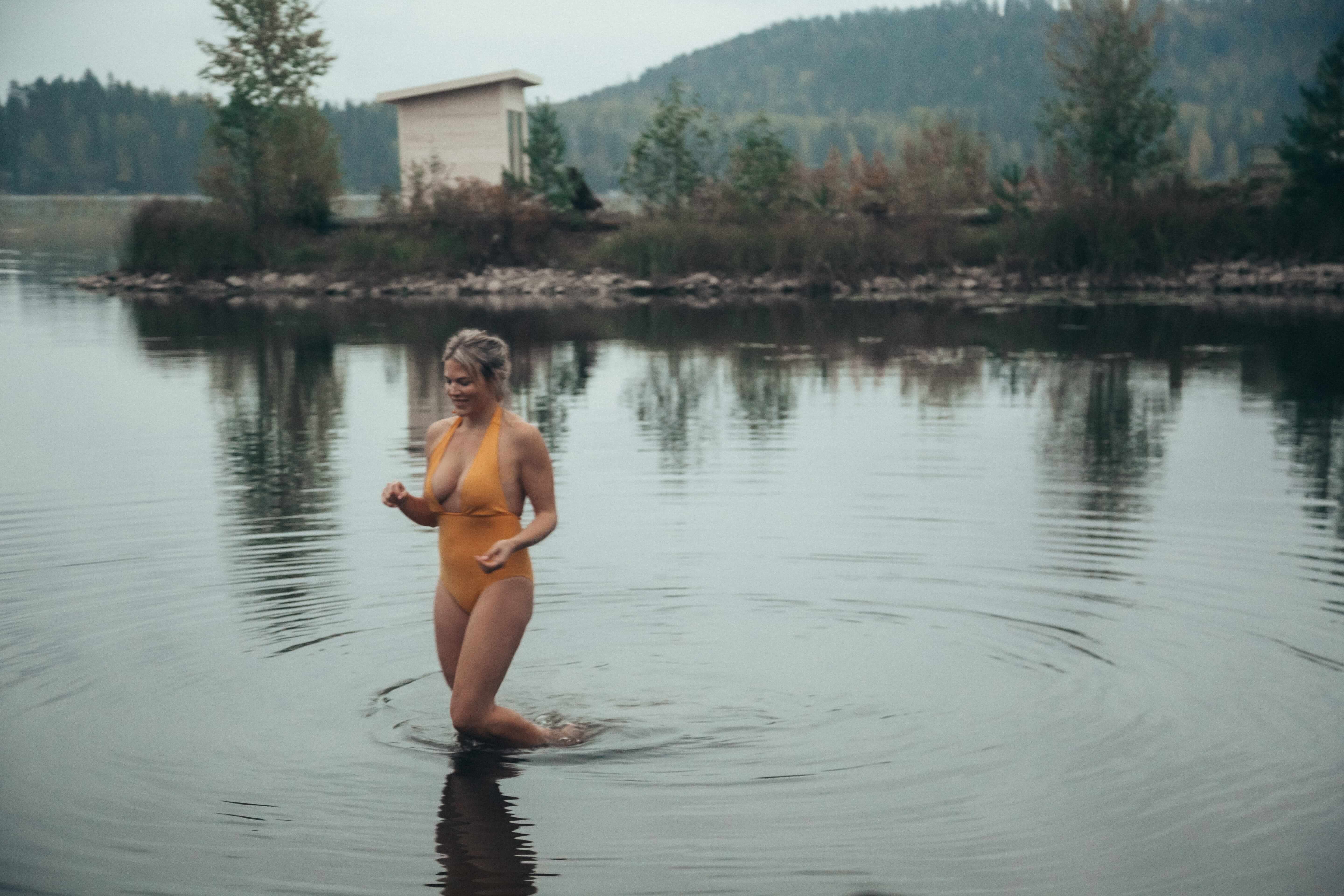
Cold Exposure & Sauna Benefits: How Hot and Cold Therapy Supports Your Well-Being
Cold exposure and sauna bathing are powerful, natural ways to support recovery, resilience, and overall well-being. Whether it’s a cool shower, a cold soak, or a winter swim, exposure to cold may help support nervous system regulation, circulation, and mental clarity.
When paired with the warmth of a sauna, these effects may become even more pronounced.
Dr. Emilia Vuorisalmi, physician and expert in hormonal health, explains how cold exposure works—and why pairing it with sauna use can amplify the benefits.
Why Cold Exposure Is Gaining Popularity
Stepping into cold water is a shock to the system—your breath catches, your skin tingles, and within seconds, your mind feels sharper and more alert.
Cold plunging, ice baths, and ice swimming have rapidly gained popularity as more people seek natural ways to support energy, recovery, and stress management. While ice swimming is often associated with Nordic traditions, cold exposure can take many forms—and the benefits extend beyond extreme temperatures.
As Dr. Emilia explains, it’s not just about icy water—it’s about how your body responds to cold as a stimulus.
What Happens to Your Body During Cold Exposure
When you step into cold water, your body reacts immediately. Adrenaline and noradrenaline levels rise, your breathing quickens, and the initial sensation may feel intense or uncomfortable. As your breath begins to settle, the body starts to regulate itself. The parasympathetic nervous system—responsible for rest and recovery—gradually activates, and the initial intensity can shift into a sense of calm and control.
Dr. Emilia describes cold exposure as a powerful tool for supporting nervous system regulation. It can quickly increase alertness, yet it may also help calm the body when it is under stress. In this way, cold exposure can serve as an effective way to help rebalance the nervous system.
Why Cold Water Therapy Feels So Good
“At first, it feels uncomfortable—and then it feels really good,” says Dr. Emilia.
She describes how she became drawn to cold exposure because of its balancing effect on the nervous system. During periods of stress, she notes that it can help bring a sense of clarity, while the body begins to settle.
Cold exposure may also be useful before situations that require focus. Dr. Emilia shares that she sometimes turns to it before important meetings or recordings, as the increase in noradrenaline and dopamine may help support concentration and cognitive performance.
That initial “comfortably uncomfortable” sensation is often linked to dynorphins, which intensify the experience. As the body adapts, endorphins are released, which can contribute to a sense of well-being. Briefly stepping outside your comfort zone and then returning to warmth can leave you feeling refreshed—almost as if both body and mind have reset.
How Sauna and Cold Work Together
Cold exposure is often paired with sauna bathing, creating a contrast that makes the experience both more approachable and more enjoyable. Warmth and cold complement one another, and alternating between them may help support recovery while strengthening the body’s ability to adapt to stress.
In the sauna, blood vessels dilate and circulation increases. When transitioning into cold, blood vessels constrict rapidly. This alternating response creates a natural pumping effect, which may support vascular function and help the body clear metabolic byproducts associated with physical exertion.
Alternating between heat and cold also engages the autonomic nervous system. Cold exposure activates the sympathetic (fight-or-flight) response, temporarily increasing alertness, while returning to warmth supports activation of the parasympathetic (rest-and-recovery) system. Over time, this shift between states may help support the body’s ability to regulate stress more effectively.
As Dr. Emilia explains, regularly moving between sauna heat and cold exposure can help train the nervous system. “When we alternate between the heat of the sauna and cold water, we train our autonomic nervous system. The body can learn to recover more efficiently and tolerate stress more effectively.”
Different Ways to Practice Cold Exposure
Cold exposure doesn’t need to be extreme to be effective.
Options include:
-
Cool or cold showers
-
Cold water immersion
- Outdoor swimming in cooler temperatures
Dr. Emilia emphasizes that the cold does not need to be extreme to be effective. Water between 50–59°F (10–15°C) may already be enough to stimulate beneficial responses, including potentially activating brown fat and increasing dopamine levels.
For most people, 1–3 minutes is sufficient.
In colder water, the effects happen faster—but longer exposure is not better. Moderation and listening to your body are key.
Why a Gentle Approach to Cold Exposure Works Best
The effects of cold exposure are highly individual. As Dr. Emilia explains, factors such as body composition, hormonal balance, age, and overall stress levels all influence how the body responds.
In women, the body is particularly effective at protecting vital organs, which means blood vessels may constrict more readily—making cold exposure feel more intense. This is one reason why the same conditions can feel very different from person to person.
Dr. Emilia also emphasizes that your current stress load plays an important role. If your body is already under significant strain, very intense cold exposure may add to that load rather than support recovery.
For this reason, she highlights a simple principle: less is often more. The goal is not to push extremes, but to find an approach that feels supportive and sustainable.
In her own routine, Dr. Emilia often chooses cooler showers or swims in natural water once temperatures are milder, finding that more moderate cold exposure works best for her body.
How to Get Started Safely
The body adapts to the cold gradually. With regular exposure, tolerance improves and the experience becomes more comfortable.
If you’re new to cold exposure:
-
Start with cool showers
-
Keep exposure brief at first
-
Focus on slow, steady breathing
-
Stay relaxed, especially in the shoulders
Over time, you can increase duration as your body adapts.
If you’re planning to try outdoor or cold-water swimming, simple gear can make the experience more comfortable. Gloves and neoprene shoes can help protect your hands and feet, and returning to the warmth of a sauna can provide a natural and supportive contrast to the cold.
Potential Benefits of Regular Hot and Cold Therapy
With regular practice, hot and cold therapy may help:
-
Reduce stress
-
Improve recovery
-
Support circulation
-
Enhance mental clarity
-
Increase energy levels
-
Support nervous system balance
-
Build resilience to stress
Important Safety Considerations
Cold exposure is not suitable for everyone. If you have heart conditions, high blood pressure, or other medical concerns, consult your healthcare provider before starting.
A Balanced Approach to Cold Exposure
“Every day is different. Your body’s stress levels affect how you respond to the cold. This isn’t about pushing yourself—it’s about listening to your body and finding what works for you.”
— Dr. Emilia Vuorisalmi


